Data & Insights Overview
This page explains the key steps and best practices for this feature in Wejot.
After responses are collected, the study is not finished. The next critical step is to understand what the data is telling you.
In Wejot, analytics is not a separate specialist tool. It is a natural extension of the research workflow, supporting you to gradually form judgments and conclusions.
After responses enter the Settled state:
- Approved responses enter analytics
- Responses marked invalid are automatically excluded
- Both raw data and processed results are preserved
At this point, you can start reviewing distributions and running analysis.
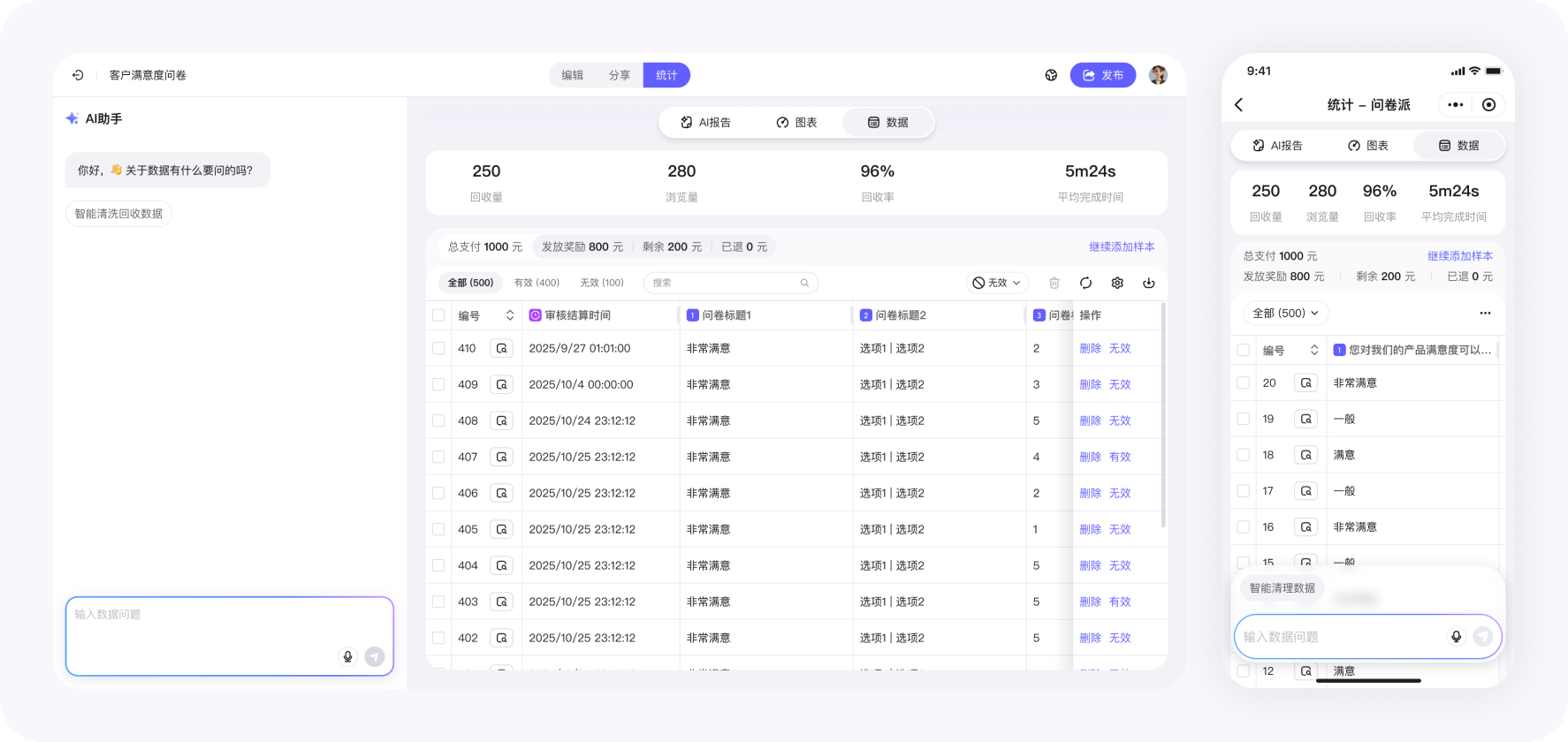
The analytics page helps you quickly understand collection and distribution, including:
- Total responses and valid responses
- Distributions per question
- Proportions and basic patterns across options
These help build an overall understanding of the data—rather than serving as final conclusions.
In Wejot, the goal of analysis is not to replace your judgment. It helps you answer foundational questions such as:
- Does the data match expectations?
- Are there obvious biases or anomalies?
- Do we need to supplement sample or adjust study conditions?
These decisions often happen before final conclusions.
Analytics is not isolated:
- Survey structure affects interpretability
- Sampling criteria affects representativeness
- Collection method affects distribution patterns
So analysis results should be interpreted with research design in mind.
You can think of analytics as:
Turning scattered answers into information that can be discussed.
It connects collection to insights, and is a key basis for deciding whether to continue, adjust, or conclude a study.